
Mendelian genetics predicts how single traits — the ones controlled by one gene with a dominant and recessive version — sort and re-sort across generations, and for a handful of cannabis traits that prediction holds up perfectly. What it misses is almost everything that actually makes a plant good: yield, potency, terpene profile, and resin production are all polygenic, meaning dozens of genes stack together to produce them, and no Punnett square on earth predicts a stack like that.
Where Mendel Actually Nails It
Give Mendel credit where it’s earned. Certain cannabis traits really do behave like his pea plants — one gene, one dominant version, one recessive version, clean ratios every time you cross them. Leaflet shape can behave this way. So can certain color traits, and so can the presence or absence of specific single-gene markers breeders track for sex expression and a handful of chemotype switches — the gene that determines whether a plant runs the THC-dominant or CBD-dominant pathway is a textbook single-gene trait, dominant THC allele over recessive CBD allele, predictable ratios across a cross.
When you’re working with a trait like that, the old 3:1 ratio from a monohybrid cross isn’t a rough guideline. It’s math you can plan a breeding project around. Cross two heterozygous plants for a single-gene trait and you know, before you ever plant a seed, roughly what proportion of the offspring will show which version.
Where It Falls Apart
The traits that actually sell your product don’t work that way, and this is the part that trips up new breeders who learned Mendel in high school biology and assumed the rest of genetics scales up the same way. Yield isn’t one gene. It’s the combined output of root development, branching structure, internode spacing, flower density, and light response, each one influenced by multiple genes, each of those genes interacting with the others and with the growing environment on top of it. Same with potency — cannabinoid production runs through multiple enzyme pathways, each coded by more than one gene, and the final number on a lab report is the sum of all of them working together, not one gene switching on or off.
Terpene profile is worse. You’re not looking at one gene deciding limonene versus myrcene. You’re looking at a whole suite of terpene synthase genes, each one contributing a piece of the final smell and flavor, plus environmental factors like temperature and light stress that turn some of those genes up or down after the genetics are already locked in. Mendel’s math describes a light switch. Polygenic traits are a mixing board with forty channels, and half of them get adjusted by the weather.
Why This Matters for How You Breed
If you’re chasing a single-gene trait, Mendelian math will get you there fast and predictably. Sex expression, certain chemotype switches, specific color traits — plan the cross, run the ratios, you’ll land close to the numbers. But if you’re chasing yield, potency, or terpene complexity and you’re breeding like it’s a single-gene trait — cross two plants, expect the good traits to show up in tidy fractions, get confused when the F2 spread looks nothing like 3:1 — you’re using the wrong tool for the job. Polygenic traits require selection across large populations over multiple generations, not ratio math. You’re not solving for a switch. You’re nudging a whole system in a direction over time.
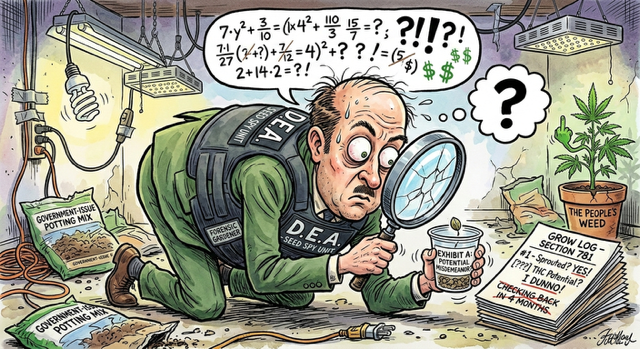
This is also exactly why phenotype hunting exists as a discipline instead of an afterthought. If yield and potency were single-gene traits, you wouldn’t need to run a hundred seeds looking for the one or two that express everything you want — you’d just track the allele and know which offspring got it. Because they’re polygenic, the only way to find the exceptional individual is to grow out the population and look. The math tells you what’s possible. It doesn’t tell you which plant in the tent is the one.
Give the Man His Due, and Know Where He Stops
Mendel wasn’t wrong about anything he actually studied. Pea plants really do sort the way he said, and single-gene traits in cannabis really do follow his ratios exactly. Where breeders go wrong isn’t distrusting Mendel — it’s assuming his framework covers traits it was never built to explain. He handed us the light switch. Everything cannabis actually gets grown for is the mixing board, and that part of the science is still being written, one hunted phenotype at a time.