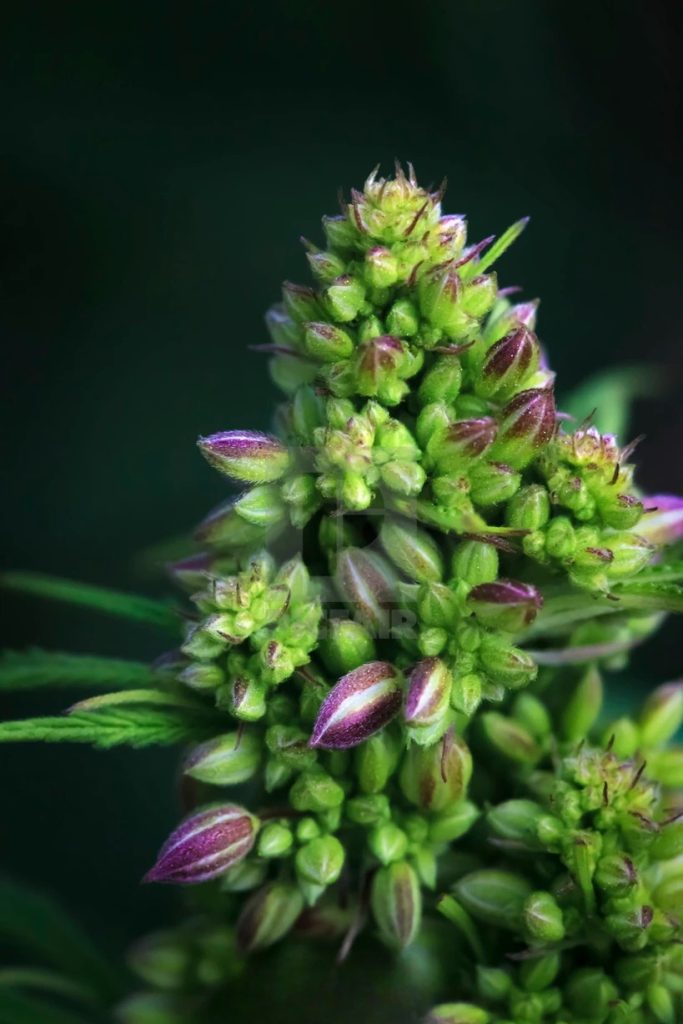

Hybrid vigor works because crossing two genetically distinct lines masks the weak recessive genes each parent was quietly carrying, which is why an F1 hybrid often outgrows and outperforms both its parents. It stops working because that effect only exists in the first generation — breed two F1 hybrids together and the recessives that got masked start pairing back up again, and the vigor collapses right along with your yield.
The Masking Effect — Why F1s Hit So Hard
Every plant carries recessive genes it never expresses, because a recessive trait only shows up when it’s paired with another copy of itself. A parent line that’s been inbred or stabilized for generations is loaded with these silent recessives — some neutral, some genuinely weak — sitting there paired up and expressed because the whole population shares them.
Cross that line with a genetically distinct line, and the offspring gets one copy from each side. The weak recessive from Parent A gets covered by a strong dominant from Parent B, and vice versa. The F1 ends up expressing mostly the strong, dominant traits from both lines at once, with the weaknesses buried. That’s hybrid vigor — heterosis, if you want the term for it — and it’s why the first-generation cross between two solid but unrelated lines can flat-out outperform either parent on vigor, yield, and stress tolerance.
The Parents Don’t Have to Be Pure — But You Want Them To Be
Here’s something people assume wrong going in: the two lines you cross don’t technically have to be pure inbred lines to throw an F1. You can cross two polyhybrid plants and still get heterosis, as long as the two lines are genetically distinct enough to be masking different recessives from each other. The mechanism doesn’t care about the paperwork.
But normally, you want pure inbred lines on both sides, and here’s why. When you cross two stabilized inbred lines, every seed in that F1 batch is close to identical, because both parents are already uniform and the cross itself is predictable. Cross two polyhybrids instead, and you’re combining two populations that are each still throwing their own internal variation — so your “F1” batch isn’t one hybrid, it’s a scatter of slightly different hybrids wearing the same label. That’s not hybrid vigor done right. That’s a coin flip with extra steps.
There are two roads to a real F1, and both end at the same place. The first is the sure way: take a pure, known line — landrace genetics that have bred true for years, sometimes decades, with a documented history behind them — stabilize it further if it needs it, then go find a second line with the traits you want on the other side and stabilize that one too. Once you’ve got two solid inbred lines, you search for the specific characteristics you’re after and cross them. It takes longer up front because you’re building or confirming two stable lines before you ever make the cross, but the F1 you get out the other end is dependable, batch after batch.
The second road is faster and messier: build up two different strains at the same time, watching for the traits you like as you go, and put them together once you’re satisfied with both sides. You get to your F1 quicker, but you’re carrying more risk that one side wasn’t as locked in as you thought.
Either way, once you’ve got two genuinely distinct, sufficiently stable lines, the F1 cross between them is the gold standard for seed production in every branch of horticulture and agriculture — not just cannabis. Corn breeders figured this out generations ago. So did tomato growers, so did rice breeders, so did practically every major food crop seed company on the planet, because a controlled F1 cross gives growers exactly what a farmer needs most: predictable, uniform, high-performing plants from every seed in the bag. Cannabis breeding is just now catching up to a principle field agriculture has been running on for the better part of a century.
And none of it exists without Mendel. Every Punnett square in this piece, every ratio, every prediction about how a recessive trait gets masked or expressed — that’s Gregor Mendel’s pea plant work from the 1860s, still holding up without modification a hundred and sixty years later. Cannabis breeders like to talk like they’re discovering something new. Mostly, we’re just the latest people to apply what a monk in a monastery garden figured out first.
Why It Doesn’t Carry to F2
Here’s the part that trips up growers who had a monster F1 and assumed they’d struck gold forever: breed two F1 plants together and you’re no longer combining two distinct lines. You’re combining two plants that are both already hybrids of the same two lines. The genetics start reassorting, and all those masked recessives get a chance to pair back up with each other again. Some F2 plants will still be strong. Some will show traits neither parent ever displayed, because recessives that were separately masked in each F1 parent can now show up paired together for the first time. The population spreads out, and the uniform vigor you saw in F1 is gone.
This is the single most common disappointment in home breeding. Somebody crosses two stable lines, gets a beautiful, vigorous F1, saves seed from it, plants the F2, and calls me confused about why the garden looks hammajang compared to last year. Nothing went wrong. That’s just what F2 does. It’s not a bug in your technique — it’s the genetics doing exactly what genetics do.
The F2 Spread Isn’t Just a Loss — It’s Where the Keepers Hide
Here’s the flip side nobody talks about: that same spread is exactly why we run F2 populations at Big Island Genetics in the first place. Yes, you lose the uniform vigor. But losing uniformity means the population is throwing more genetic variation than you’ll ever see in a tight F1, and variation is raw material. Traits that were masked in both F1 parents can pair up together for the first time in F2 and produce something neither grandparent ever showed — a terpene profile, a structure, a resin expression that’s genuinely new.
That’s where phenotype hunting actually happens. We don’t run big F2 populations expecting every plant to be a keeper. We run them because somewhere in a hundred hammajang F2 seedlings, one or two will throw something unusual enough to stop you in your tracks — and those are the ones that get cloned, not composted. The clone locks that one-off expression in place forever, because once you’ve found it, you don’t need the plant to breed true. You need it to not change.
What This Means for How You Breed
If you want that hybrid vigor again, you don’t grow out the F2. You go back to the original two parent lines and make a fresh F1 cross. That’s why serious seed production keeps parent lines maintained and separate rather than growing generation after generation from hybrid seed — the vigor lives in the cross itself, not in the seed line you get from it.
If what you actually want is a stable, reproducible line rather than a one-generation vigor spike, that’s a different project entirely — that’s the territory of selective backcrossing, working the population back toward fixed, predictable traits instead of chasing the F1 high every time. Two different tools, two different goals, and confusing them is how a lot of promising genetics projects end up going nowhere.
Why This Trips Up Even Experienced Growers
The Professor has fallen for this exact trap. Not once — twice, ten years apart, which tells you it’s not a beginner mistake so much as a memory problem. You grow an F1 that blows every expectation out of the water, you get attached to it, and you talk yourself into believing you found something stable when what you actually found was a lucky one-time combination. The second time it happened I wrote the parent line names on the wall of the grow room in permanent marker specifically so I couldn’t lose track of what made the cross work. Akamai, maybe, but only after being dumb about it twice.
The tell is almost always in the F2 spread. If your F1 was rock solid and uniform and your F2 population looks hammajang — some runts, some monsters, some plants expressing traits you never saw in either grandparent — that’s not bad luck or bad growing. That’s heterosis doing exactly what it does. The uniformity was never in the genetics. It was borrowed from the cross.
Hybrid vigor isn’t a trick you learn. It’s a one-generation loan against genetics your parent lines were already carrying — and like any loan, the bill comes due the moment you try to breed it forward on its own.