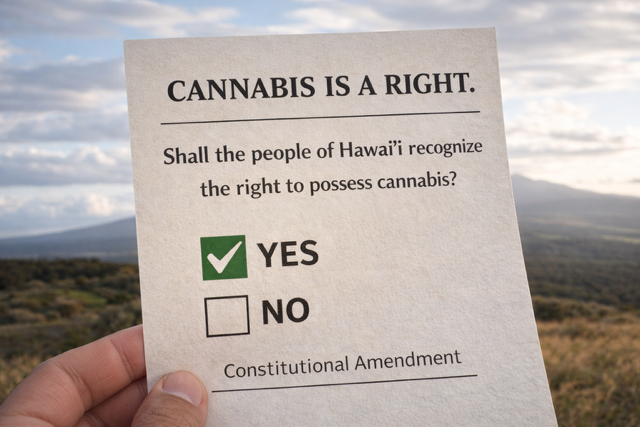
How a $50 Health Registration Paper Trail Became the Foundation for Statewide Undercover Raids
The State of Hawaiʻi told the public a $50 fee was administrative housekeeping. What it actually built was an armed task force. That’s not a metaphor, brah — read the job posting yourself. The Department of the Attorney General has assembled a statewide criminal unit, staffed with sworn, gun-qualified investigators, whose job is to identify, raid, and padlock hemp retailers. The $50 registry wasn’t oversight. It was the intelligence map they needed to do it.
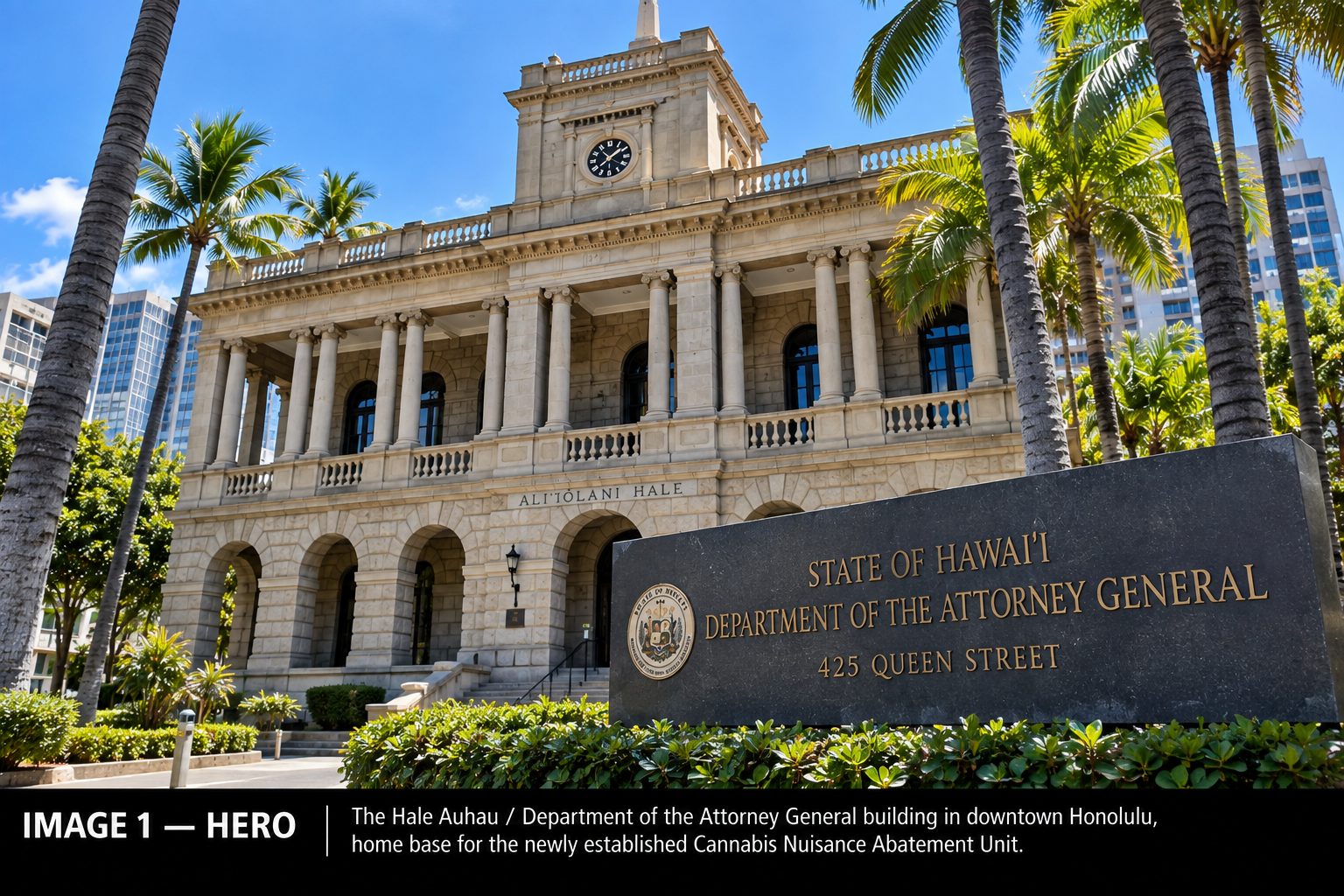
I’ve watched this island regulate cannabis for thirty years now — badly, well, and every flavor in between. I’ve never seen a paperwork fee turn into a SWAT pipeline this fast. Let’s talk story about how it happened, because the mechanism is more interesting, and more damning, than the headline.
Armed ‘Ronin’ for the Cannabis Nuisance Abatement Unit
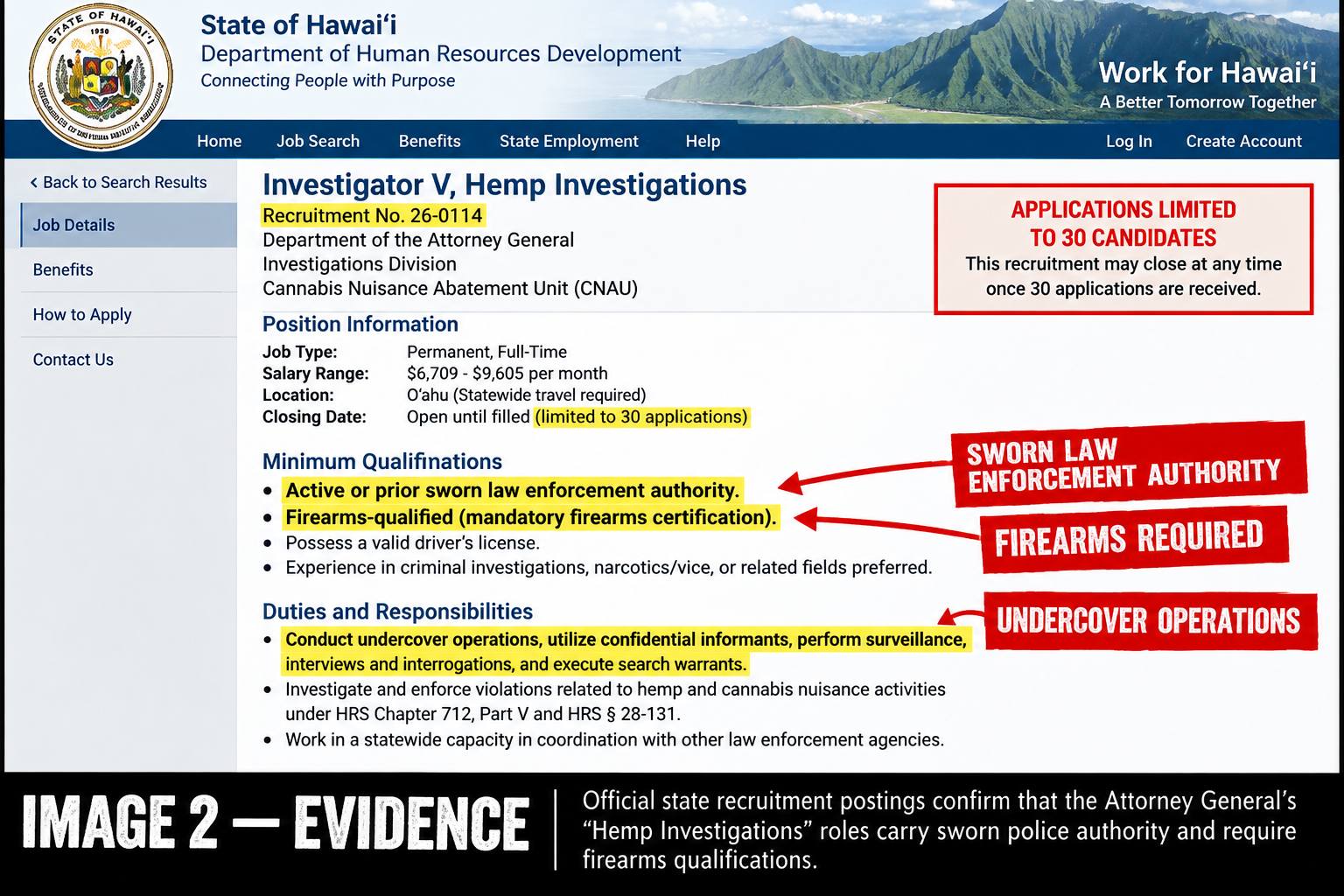
Recruitment No. 26-0114 is a real state job posting. It’s not for a health inspector with a clipboard. It’s for Investigator V, Hemp Investigations, inside something called the Cannabis Nuisance Abatement Unit — CNAU for short — and the state capped applications at 30 before shutting the portal. That’s not a hiring surge. That’s a unit standing itself up quietly and fast.
Here’s what the posting actually requires:
Mandatory firearms certification. Active or prior sworn law enforcement authority, firearms-qualified. Not a suggestion. A requirement.
Tactical scope. The majority of the job is undercover buys, running confidential informants, surveillance, interrogation, and executing search warrants. That’s vice squad language, not compliance-office language.
Padlocking power. Under HRS § 28-131 and Chapter 712, Part V — the Drug Nuisance Abatement statute — these investigators can seize commercial property and physically padlock a storefront.
Requiring prior firearms qualification tells you exactly who they recruited: veteran narcotics and vice cops, pointed at a new target. The state didn’t build a compliance division. It built a unit with a badge history and a gun locker, and handed it the hemp market.
The Federal Trap and the Pre-Emptive Army
The mainland is still arguing about federal hemp definitions — deadlines slip, lobbies fight, nothing resolves. Hawaiʻi didn’t wait for Washington to make up its mind. The state built its own enforcement engine, entirely independent of federal timing, and it runs in three stages:
- DOH / OMCCR Registry Database — tracks every registered seller, processor, and distributor, and flags anyone operating outside the $50 registry.
- Administrative Screening — audits labels and certificates of analysis, checks for banned product forms — vapes, pre-rolls, flower — and flags uncooperative sellers.
- CNAU Criminal Referral — the armed stage. Undercover buys, surveillance, search warrants, asset seizure, and padlocking landlords who won’t cooperate.
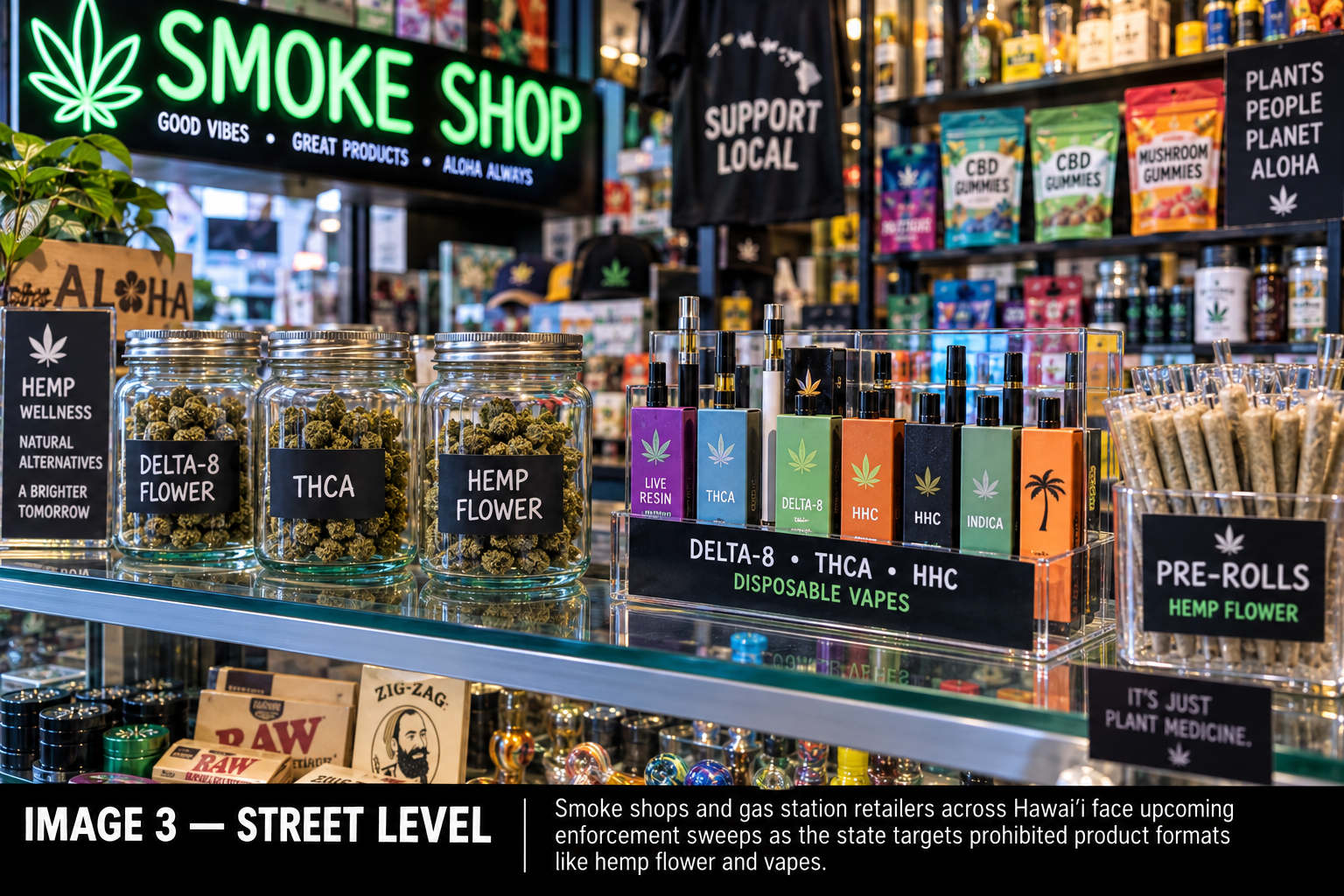
Hawaiʻi’s own rules — HAR Chapter 11-37 and Act 269 — already ban smokable hemp, vapes, pre-rolls, and high-potency edibles outright. So while mainland retailers wait on federal clarity, Hawaiʻi quietly finished building, funding, and staffing the exact squad it needed to enforce a ban that was already on the books. The $50 registry gave them the map. The armed unit gave them the muscle. Both were done before most shop owners knew there was a fight.
The Corporate Dispensary Pipeline
Every enforcement unit needs a sponsor, and this one has fingerprints. Act 269 — HB 1482 — came out of aggressive lobbying by Hawaiʻi’s licensed medical cannabis dispensaries.
Think about what those dispensaries carry that a gas station doesn’t: state licensing fees, high tax rates, mandatory testing, security requirements, and a compliance department that costs real money every month. Meanwhile the smoke shop down the road has been selling federally compliant Delta-8, hemp flower, pre-rolls, and vapes without paying one cent into that infrastructure. From where the dispensary owners sit, that’s not a competitor. That’s a business running the same product with none of the overhead.
So they went to the legislature and made the case that grey-market shops were functioning as illicit dispensaries. Lawmakers agreed. Act 269 is the result — and a $50 paperwork registry became the intelligence backbone for armed criminal investigators. This is what industry capture looks like when it’s done through statute instead of a backroom deal: perfectly legal, fully documented, and paid for with your tax dollars.
Preparing for War Ahead of State Deadlines
July 1, 2026 was the hard deadline for active enforcement against non-registered sellers and banned product formats. By the time that date arrived, the armed officers were already in place inside CNAU. The infrastructure to clear shelves and padlock doors wasn’t being planned. It was operational.
That’s the part people keep missing when they hear “$50 registration fee” and shrug. You don’t build, fund, and staff an armed task force with search-warrant authority and then let it sit idle. Once that unit exists, using it isn’t a possibility the state is weighing. It’s a certainty already in motion — the only open question is which storefront gets the visit first.